

















































As the race to extend mobile connectivity beyond terrestrial boundaries heats up, non-terrestrial networks (NTN) are emerging as a critical piece of the 5G puzzle. Vendors worldwide are working to develop interoperable, scalable solutions that blend terrestrial 5G with orbital infrastructure. From lab-based trials to LEO constellations, Vijaya Cherian interviews industry players who are paving the way forward, offering both technical solutions and strategic perspectives on where NTN is headed.
 Vendors are pushing 5G beyond terrestrial towers and into orbit, building interoperable networks, flexible terminals and virtualised ground systems. The emerging NTN ecosystem promises to transform connectivity for enterprise, government and industrial applications. From controlled environment trials to commercial deployments, Ericsson, All. Space, Kratos and OQ are each tackling critical technical and operational challenges, helping to shape a global ecosystem that extends mobile coverage to regions previously beyond reach, including the Middle East and Africa.
For Ericsson, the recent collaboration with Thales Alenia Space and Qualcomm marks a significant milestone. In a controlled lab environment, the three companies established an end-to-end 3GPP-compliant connection via a simulated LEO satellite channel, validating the core technical features for integrating terrestrial New Radio (NR) networks with NTN.
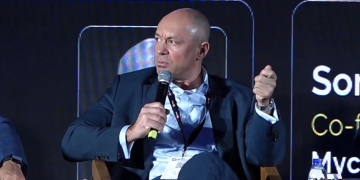
The goal was to demonstrate that 3GPP Rel-17, including NTNTN mobility features, functioned as specified, says Per Synnergren, Director, Strategic Business Development, GF Technology, Ericsson. No major technical obstacles emerged, except perhaps for the integration of a third-party radio from Thales Alenia Space.
He remarks that while the lab setup was simplified compared to future commercial projects, it confirmed that standardisation is essential for building a scalable global ecosystem.

Synnergren also highlights that early MNOs deploying device-to-device (D2D) NTN services are typically operating in vast countries with coverage gaps. While satellite D2D services cant match the user experience of terrestrial networks in busy areas or produce data at the same cost levels, they play a crucial role as lifeline connectivity solutions for messaging, voice calls, and some limited data services, he explains. Emergency responders, military operations, and industrial IoT also stand to benefit, particularly where global outdoor coverage is essential.
All.Space, by comparison, is tackling a different bottleneck with terminal flexibility. It recently secured funding from the European Space Agency (ESA) to accelerate the development of integrated 5G NTN capabilities within its next-generation terminal platform.
This is a key step for us to be able to offer a standardised software-defined modem as part of our terminal. It will enable any of our users to access a 5G NTN network offered by the satellite operators these networks are not yet there but are coming in the near future. This flexibility will be a really positive step for the industry and finally remove the need for proprietary, custom, expensive modems to access each satellite network, explains All. Space CTO, John-Paul Szczepanik.
 He says todays terminals are siloed and network-locked, like Starlink. All.Space is all about offering customers access to all the networks in space. We are expanding the list of networks over time, but a challenge is always the custom modems that you need to access these networks. As the operators start to standardise and look to 5G NTN, this development programme and product offering will remove that problem, he says.
Szczepanik calls the opportunity for the All.Space terminal massive: Were really only starting to explore what you can do with compute and intelligence paired with a terminal at the edge. Having a standard waveform to access many networks is a key foundation for this.
 Like Synnergren, Szczepanik stresses that standardisation is critical, adding that All.Spaces collaboration with ESA aligns the satellite industry with decades of 3GPP work. The company is also moving toward hybrid business models, combining high-performance hardware with subscription-based software services in response to strong customer demand for Satcom as a Managed Service. Near-term applications focus on government and commercial sectors requiring dual-use capabilities.
Our collaboration with NXGSAT and ESA represents the first step in building a more flexible, modular satcom platform. All.Space differentiates itself through flexibility, capability, and its patented lens-based phased array technology, enabling simultaneous links to multiple networks for resilience and customer flexibility. We are also exploring opportunities in the Middle East, where the market shows strong growth potential.
On the ground systems front, Kratos is enabling scalable architectures to support commercial-scale 5G NTN deployments. The company recently demonstrated an end-to-end 5G NTN network that combined its OpenSpace software-defined satellite ground system with Intelsats infrastructure, including a cloud-native, virtualised 5G core. Working with Radisys and Viavi, Kratos showed data traffic flowing across a satellite network with multiple test UEs joining from different US locations and also demonstrated the use of DIFI as a digital RF transport mechanism for the 5G NTN waveform in distributed deployment scenarios, transmitting digitised RF data from a central cloud-native gNodeB to an antenna hundreds of miles away.

Jennifer Barber, Director of Product Management for 5G NTN Solutions, Kratos, notes that most ground systems today rely on proprietary, purpose-built hardware that limits flexibility and scalability. In many cases, for an operator or service provider, the move to 5G NTN requires a complete hardware refresh. The good news is that the development of software-defined satellites has jump-started a move toward virtualised ground networks that can not only match the flexibility of these new satellite payloads, but better support commercial-scale 5G NTN deployments. Adoption of digital RF standards such as DIFI and the push to virtualise satellite modem technology on common compute platforms will continue to be key enablers in the satellite industry as 5G NTN becomes more mainstream.
She adds that orchestration and virtualisation are vital for integration with terrestrial 5G. Our focus is on leveraging open interfaces and global standards for orchestration to support a variety of deployment scenarios across common infrastructure components. Alignment with deployment models and infrastructure already adopted by telco and MNOs will facilitate integration between TN and NTN networks and unlock the ability for NTN networks to scale efficiently and cost-effectively.

Kratos OpenSpace platform allows operators to manage multi-orbit, multi-vendor, and multi-waveform networks, integrating legacy systems alongside 5G NTN while paving the way toward 6G. Signal integrity, dynamic spectrum management, and virtualised architectures make it possible to adapt to evolving spectrum allocations without costly hardware overhauls. Barber stresses that this flexibility is particularly relevant in underserved regions of the Middle East and Arab Africa, where cost-effective ground solutions can drive adoption.
Unlike DVB-S2X, Barber says the 5GNR waveform was not designed with satellites in mind. While there are many benefits of 5GNR in terms of flexibility, scale, open ecosystem etc, expertise in digital signal processing techniques and satellite-specific channel effects is required in order to effectively utilise the 5GNR waveform over satellite links, Barber says. The flexibility of the 5GNR waveform makes it an ideal candidate for deployment in contested or high-density operating environments. In such scenarios, leveraging spectral monitoring capabilities in conjunction with a dynamic spectrum management system allows the user to optimise their deployment in response to rapidly changing network conditions.

As 3GPP evolves support from S and L bands in Release 17 to Ka in Release 18 and Ku in Release 19, Kratos sees virtualisation and digital RF transport as essential to adapting without full system overhauls. Low-cost, flexible solutions for gateways and terminals will be critical to adoption in remote regions such as the Middle East and Arab Africa, with distributed deployments, edge processing, and spectral monitoring playing an increasing role.
OQ is another company pioneering in the 5G NTN space by leveraging its LEO constellation to deliver IoT and direct-to-smartphone connectivity. CEO Omar Qaise shares that OQ currently operates 10 satellites with plans to expand to more than 80 by 2028. The constellation is designed for IoT in remote locations, benefiting industries such as Oil & Gas that operate in areas without cellular coverage, face hazards like wildfires or floods, or run automated plants. With the new satellites, we will offer Direct-To-Smart Phone connectivity, he says.
OQs network is licensed in multiple countries, with a strong focus on Saudi Arabia, providing monitoring and operational efficiency for thousands of assets. This is helping companies to increase efficiency, reduce costs, and take decisions based on reliable data provided by our satellites. However, given the geographical and coverage similarities, along with industry needs across MENA, the region presents significant opportunities for 5G NTN connectivity and will be highly relevant for us in the near future, Qaise says.
The companys collaboration with Airbus has enabled NTN NB-IoT on drones, making OQ the only company worldwide to offer this capability today. Qaise describes a strategy that combines spectrum ownership, a standard 3GPP satellite fleet, and direct enterprise sales providing flexibility and scalability unmatched by competitors who lease capacity or rely on proprietary networks. OQ has also integrated MNOs and MVNOs into its network, extending terrestrial services and supporting enterprise use cases in areas lacking coverage. Its commercial deployments, both direct and via wholesale collaborations, represent the first combined LEO and GEO NB-IoT offerings, highlighting a growing dual-use satellite market.

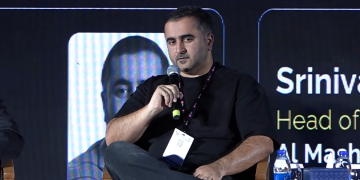
Development, GF Technology, Ericsson
Across these vendors, common themes emerge. Standardisation whether for terrestrial-to-NTN integration, terminal design, or ground systems remains foundational. Flexible, open software-defined architectures and the interplay between LEO and GEO systems are enabling broader coverage and more diverse services than ever before. Commercial opportunities extend from enterprise IoT to government and emergency services, while device interoperability and network integration are key to scaling globally.
The market outlook shows convergence: Ericsson anticipates initial real-world deployments in 20272028, All.Space is actively exploring new regions including the Middle East, Kratos is ensuring ground infrastructure keeps pace with satellite and virtualised network innovation, and OQ is already providing direct-to-device connectivity in select regions. As the ecosystem grows, D2D and IoT services will extend mobile coverage far beyond terrestrial limits, with hybrid business models, open platforms, and standard-compliant satellites defining success in the emerging 5G NTN landscape.
With vendors advancing complementary technologies from Ericssons lab-validated network integration to All. Spaces flexible terminals, Kratos scalable ground systems, and OQs operational LEO constellation the 5G NTN ecosystem is clearly moving from concept to deployment. The collective push toward standardisation, interoperability, and commercial viability indicates that the era of satellite-augmented mobile connectivity may soon be within reach.