


































The partnership will ensure effective deployment of EVS’s next-generation FCR solution, optimal customer satisfaction, and seamless change management for end customers.
EVS and Qvest have entered into a new strategic partnership to support the rollout of EVS’s next-generation Flexible Control Room (FCR) solution. The agreement builds on the companies’ long-standing collaboration and aims to help broadcasters transition seamlessly to software-defined production environments.
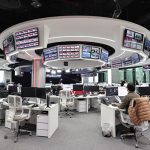
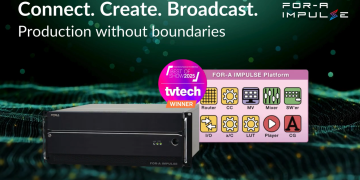
Unveiled at IBC2025 alongside its modular interface, Tactiq, the FCR solution replaces traditional hardware-based control rooms with scalable, software-defined workspaces. This flexibility enables production teams to adapt to evolving requirements, work across formats and locations, and collaborate effectively on both live and on-demand content.
To ensure smooth adoption, Qvest will implement structured change management strategies for every deployment. This includes assessing operational environments, identifying key stakeholders and executing transformation programmes to align teams. Tailored training and ongoing support will further prepare staff to embrace new workflows and maximize the benefits of FCR.
Speaking about the partnership, Nicolas Bourdon, CCO at EVS, said: “With FCR, we’re helping our customers rethink how production control rooms should work in a modern, multi-platform world. We are glad to collaborate with Qvest, a forward-thinking systems integrator with extensive experience in handling complex projects.This partnership will provide our customers with top-tier expertise, not only in deploying the technology, but also in supporting their internal evolution to fully leverage FCR’s flexibility.”
Thomas Müller, CTO at Qvest, added: “We are pleased to strengthen our partnership with EVS through the rollout of FCR. By combining our deep expertise in systems integration with consultancy in broadcast transformation and change management, we are uniquely positioned to help broadcasters transition smoothly toward flexible, modernised, and software-defined operations.”
The renewed collaboration reflects both companies’ commitment to driving innovation in live production and supporting media organisations as they modernise workflows in response to industry transformation.