


































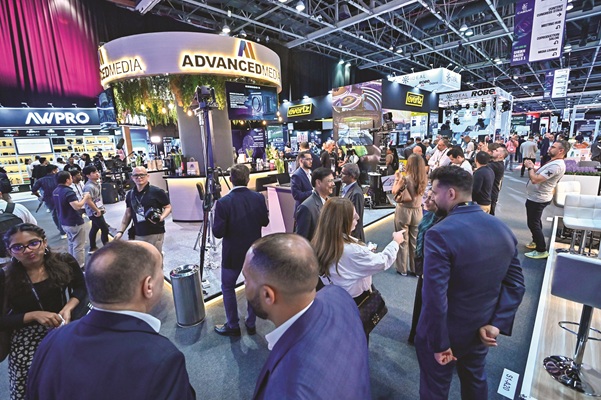
From AI-led workflows to immersive production and new funding models, the Middle East’s broadcast and media ecosystem is being reconfigured in real time. CABSAT’s next chapter will reflect how technology, talent and ambition are converging across the region.
The broadcast and media industry is at a point of structural change. Artificial intelligence is moving from experimentation into everyday workflows, immersive production is becoming more accessible and the boundaries between broadcasters, creators, platforms and investors are increasingly blurred.
Across the Middle East, these changes are unfolding rapidly. Investment in infrastructure, talent and production capability continues to accelerate, and regional broadcasters and studios are playing a more active role in global content conversations. Industry events like CABSAT reflect this evolution, adapting in step with the market they serve.
From experimentation to execution
AI remains one of the clearest indicators of how rapidly broadcast workflows are evolving. The conversation has moved decisively beyond whether AI should be adopted to how it can be implemented responsibly and at scale. Automated editing, real-time captioning, multilingual localisation and metadata management are now part of everyday production environments.
In the Middle East, which is defined by linguistic diversity and multi-platform consumption, these tools offer more than efficiency gains. They enable faster turnaround, wider reach and more precise audience engagement, and are also influencing commissioning strategies, helping broadcasters respond more quickly to audience behaviour and performance data.
Infrastructure, integration and scale
Alongside software-driven innovation, there is renewed focus on core broadcast infrastructure. Live production, IP-based workflows and system resilience remain central concerns, particularly as audiences expect higher quality and greater reliability across platforms. The continued presence of established global brands such as Ross Video, Grass Valley, Evertz and Imagine Communications reflects the industry’s reliance on proven, scalable systems that underpin critical broadcast operations.
Equally important is the role played by regional mega distributors, including Advanced Media Trading and Grand Stores, which act as the connective tissue between global manufacturers and local markets. Their scale, integration expertise and long-term partnerships remain essential to how broadcast technology is specified, deployed and supported across the Middle East. Together, these layers highlight a market that continues to value reliability and integration, even as workflows become more flexible and software-driven.
Immersive production comes of age
Immersive technologies are no longer confined to premium drama or major international sporting events. Virtual production, extended reality and real-time graphics are increasingly finding their way into news, entertainment and branded content as costs fall and expertise becomes more widely available.
Software-driven studios are evolving into hybrid environments where physical and digital production coexist. While this creates new creative possibilities, it also places greater emphasis on skills development, workflow integration and close collaboration between technical and editorial teams.
The creator economy meets broadcast
One of the most significant shifts facing the industry is the growing overlap between traditional broadcast and the creator economy. Digital-first creators are no longer operating at the margins. They are commissioning professional production, attracting brand investment and building audiences at scale. For broadcasters, this presents both challenge and opportunity. Established production values and editorial rigour increasingly influence creator-led formats, while creators bring speed, authenticity and new distribution models into the mainstream.
This convergence is reshaping how content is funded and distributed. Co-productions, partnerships and hybrid formats are becoming more common, particularly in markets where local stories are gaining international attention.
New entrants and emerging solutions
Alongside established players, there is growing attention on a new wave of technology providers entering the regional market. Norrdlys, AWPRO, Accsoon and MINAR represent a shift towards more agile, compact, mobile-first production solutions. These newer entrants often address specific production challenges, from lightweight live contribution and connectivity to streamlined on-location and creator-led workflows.
Regional investment and global ambition
The Middle East’s growing influence in the global media landscape is underpinned by sustained investment. Governments, media groups and private capital are committing resources to studios, training initiatives and content funds. Saudi Arabia’s expanding media ecosystem, alongside the UAE’s established role as a regional hub, reflects a broader ambition to play a larger role across the content value chain. This includes not only production but also distribution, technology development and intellectual property creation.
CABSAT 2026 will take place at the Dubai Exhibition Centre, Expo City Dubai from June 2-4. The upcoming edition reflects an industry in transition. As one of the Middle East’s longest-serving industry platforms, it offers a clear view of where the region is heading.
Rajendra Salgaonkar is Head of Sales, CABSAT, Dubai World Trade Centre