















































Media capability centres are emerging as a strategic alternative to traditional models and fragmented outsourcing, offering an integrated approach to scaling media operations, says Neha Modi.
With MENA’s streaming market projected to surpass $1.5bn in 2025 and SVOD subscriptions expected to top 27m across the region, demand for seamless multi-platform consumption is surging. As live event production and VOD workflows grow in scale and complexity, broadcasters, OTT platforms and regional media players are looking for reliable, scalable, automated solutions to more quickly launch, manage and monetise content.
MENA’s operators face significant hurdles in scaling across a fragmented, multi-regional market. These include high innovation costs and operational inefficiencies and complexities. Maintaining on-prem infrastructure and managing several vendor partners drains budgets, leaving fewer resources for expanding channel offerings or launching new business models (like ad-supported tiers or exclusive events). Further, broadcasters and streaming platforms grapple with barriers to quality and reliability, including issues like technical downtime, inconsistencies in stream quality and service interruptions, especially during live events. With infrastructure often spread across multiple vendors and legacy systems, meeting consumer expectations for seamless, uninterrupted viewing is an ongoing challenge.
Challenges also emerge in content turnaround and localisation. Bringing new content to market – especially localised, multi-language or catchup VOD versions – can be slow and resource-intensive. Manual workflows, compliance backlogs and regional adaptation often mean viewers wait longer for the content they want, impacting loyalty and engagement. Fragmented data and weak personalisation impact scalability too. Siloed analytics and fragmented audience data make it difficult to understand viewer preferences and deliver personalised experiences. It can be a struggle to effectively segment users or serve relevant content and recommendations, especially for younger, digital-first MENA audiences.
Additionally, delivering a unified user experience across mobile, smart TV and other devices remains challenging. Content preparation and branding are frequently inconsistent, and users encounter friction moving between platforms or formats.
By centralising and automating digital operations – from ingest and playout to localisation and analytics – Skandha’s media capability centres (MCCs) are helping broadcasters and OTT platforms overcome these operational hurdles.
So, where does the model come from?
MCCs build on the global capability centre (GCC) model and are specifically tailored to support content operations and media workflows.
Today’s GCCs drive AI automation, cloud computing and analytics solutions for global enterprises across industries including pharma, finance and manufacturing.
The MCC lowdown
Media capability centres are set to bring serious economies of scale, handling massive content volumes, speeding up turnaround times and fine-tuning go-to-market strategies to boost user engagement, expand reach and operate more profitably at scale. They function as specialised hubs that help coordinate and scale media operations across sectors such as broadcasting, digital platforms, sports, gaming, publishing and advertising. They support a range of workflows – including localisation, compliance, post-production, VFX, ad-tech, programmatic media buying, news production and audience analytics – by improving process consistency and reducing operational friction.
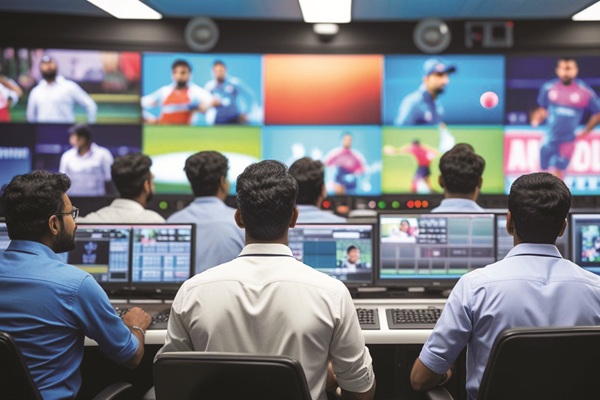
Moreover, MCCs are designed to reflect the blend of creative, technical and logistical demands typical of media and entertainment businesses. Rather than operating as external vendors, they take a more embedded role in content operations, spanning ingest, metadata tagging, postproduction, monitoring and playout. Organisations can choose between fully managed MCCs or hybrid models, depending on which functions they prefer to retain in-house and which are better suited to external support.
They also incorporate AI tools, cloud-based media management systems and automated quality control to reduce manual effort and improve workflow reliability. Offering ‘pay-as-you-grow’ flexibility during periods of increased activity – whether that’s a production surge, market expansion or seasonal content demand – MCCs enable teams to scale without overextending core resources. This model is inspired by IT infrastructure whereby customers tap manpower and resources on demand, reducing resource drain and unlocking agility. With cloud production, MCCs also open new possibilities for mixing, switching, dubbing and remote commentary.
For live sports and events, MCCs provide real-time scalable playout, AI-driven highlights and remote production, critical at a time when both established pay/SVOD platforms and emerging FAST players in MENA are pursuing exclusive rights (local football, cricket, pan-Arab leagues, global franchises, etc). Skandha currently provides services to a range of sports rights holders to enable them to deliver their content on OTT platforms, for example serving encoding vendors like MediaExcel to help their customers with level 1 and 2 support.
Knowing your audience
VOD library expansion, multi-language/ localisation and niche channel launches (kids, lifestyle, OTT-first originals, etc) are in high demand, with platforms constantly seeking workflow scalability and operational streamlining. Platforms like Shahid, StarzPlay, YouTube Premium and Netflix increasingly offer local language options, niche VOD channels and targeted FAST rollouts in response to growing demand for Arab, South Asian and sports content.
As content strategies diversify, many OTT platforms are turning to MCCs to support functions like metadata tagging, adaptive distribution, real-time monitoring, audience analytics and ad-tech integration.
Holistic hubs
By offloading infrastructure and services to MCCs, broadcasters, OTT platforms, and live sports and event producers can skip the heavy CAPEX associated with massive infrastructure and hardware upgrades. In-house OPEX can shrink by 30- 50% over time when offloading key but non-core tasks like content ingest, quality control and metadata management to an MCC, and playout costs can be slashed by up to 40%.
By investing in AI-driven automation, virtualised production and cloud-based playout, MCCs enable agile responses to shifting market demands.
A competitive necessity
The MENA market is forecast to grow more than fivefold to $8.4bn by 2029, fuelled by expanding digital infrastructure, high mobile and internet penetration, and a very youthful, engaged demographic. For media organisations navigating the pressures of scale, complexity and streaming demand, media capability centres offer a practical way forward, keeping operations lean and budgets predictable.
Beyond operational efficiency, MCCs help teams respond faster, work smarter and stay aligned across increasingly fragmented workflows. As the content ecosystem grows more complex, those already leveraging MCCs are better placed to adapt and compete. For others, the question isn’t whether to adopt, but how soon.
 Neha Modi is Managing Partner – Product & Growth (MENA) at Skandha Media Services