










































ASBU Director General Abdelrahim Suleiman has reshaped the organisation’s financial and technological foundation, turning it into a rare success. Through real estate ventures, regional training programmes and cutting-edge digital infrastructure, he has advanced a mission grounded in equity, innovation and Arab cultural identity. Vijaya Cherian reports.
In an era of crumbling public media infrastructures and shrinking budgets, the Arab States Broadcasting Union (ASBU) stands out as a model of resilience and vision. Under the leadership of its General Assembly and Director General Abdelrahim Suleiman, ASBU has transformed from a traditional intergovernmental union into a dynamic, commercially viable organisation that continues to serve the interests of Arab public broadcasters. Once Suleiman took the helm, he turned the Tunis-based organisation into a self-sustaining powerhouse that not only funds its operations independently but also invests heavily in technology, training and infrastructure for its 22 member countries.
“Over the past seven years, we’ve supported all our members with $33m through our annual budget. When I started, the budget was about $21m, but we managed to stretch our resources and support members well beyond that figure, especially since many of them were going through financial difficulties.”

This transformation didn’t happen by chance. Suleiman took a hard look at expenses, slashing ASBU’s annual budget to $15m while maintaining, and in some areas expanding, its offerings. “Each year we’ve backed the budget with $4m, entirely through our investments. We do not ask our members to pay anything for the projects. Everything from training to infrastructure upgrades is covered.”
Banking on better deals
One of Suleiman’s first moves was to reassess how ASBU handled its finances. “When I took over, ASBU was earning only $80,000-90,000 in annual bank interest,” he recalls. “That didn’t make sense for an organisation with substantial reserves.”
He pushed back against complacent banks and split ASBU’s reserves among six institutions, encouraging them to compete. The results were immediate. “Our annual income increased 15 times in the first year and then quadrupled annually,” he notes. Strategic deposits in local currencies like the Tunisian dinar, with higher interest rates, added to these gains.
Building the future
ASBU’s ambitions go beyond banking. It first built a five-star hotel, fully equipped with amenities for its members and available for commercial use during off-peak periods. The property also features a large conference hall with capacity for 600 attendees.
 Moreover, it is constructing a 15-storey commercial tower in central Tunis, with 45% already leased before marketing has even begun. Two additional towers have been approved, including one with a possible medical facility.
“These projects are not just about real estate,” says Suleiman. “They represent a shift in mindset combining sustainable business with the mission of public service broadcasting.”
Training with purpose
The ASBU Academy has evolved into a regional benchmark for media training. “We offer not just free training but also free accommodation and hospitality to all our members’ attendees. This includes full board, airport pickups and local transportation. We prioritise candidates from under-resourced countries like Djibouti, Somalia, Comoros and Palestine. For many of these broadcasters, this is the only training they receive all year. The value of that access cannot be overstated,” says Suleiman.
 “Post-Covid, we recognised the power of online certification and expanded our remote learning offerings. We’ve also launched specialised programmes for engineers, content creators and editors. We’re now looking to integrate AI and digital tools more deeply into the curriculum. My dream is to elevate the academy into a hub for future-facing media education across the Arab region. The goal is not just skills development but also equity, ensuring that all Arab countries have access to top-tier training regardless of their economic situation.”
Reviving Syria’s media infrastructure
ASBU’s facility in Damascus remained unused for a long time due to regional instability. Suleiman held off on lowball rental offers until the right partner emerged.
“Our Damascus facility is quite big and has both a training centre and a hotel. For a while, the best offer we got was a couple of hundred thousand dollars annually. Recently, interest picked up again. We had visits from various companies in the region, and have now leased it to a Gulf-based firm at five times the previous rate. We’re transforming it into a media production hub with professional studios, editing suites and post-production capabilities. It will serve both local and regional clients. The goal is to make it a full-fledged regional training and production base. It’s important that we revive Syria’s media infrastructure and reintegrate it into the regional ecosystem.”
Powered by cloud and satellite
ASBU’s technological evolution is no less ambitious. The organisation now operates four HD satellite television channels on Arabsat and Eutelsat, and multiple radio and TV systems on its MENOS system, as well as unlimited TV and radio streaming supported through its cloud platform.
 Radio content exchange between members has increased from 15 to 31 hours daily, and television content now averages 24-27 hours a day. “Around 80% of our radio content and 70% of television traffic now flows through the cloud. It’s a massive transformation. We’ve invested in connectivity and server infrastructure to support seamless exchange. Our engineers work around the clock to ensure uptime, and we’ve extended this capability to members at no additional cost. Many countries simply could not afford this infrastructure on their own, so we stepped in.”
Raising ASBU’s profile
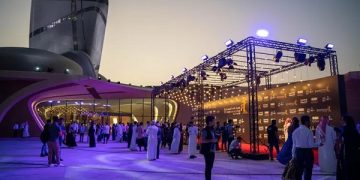
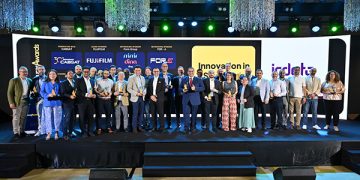
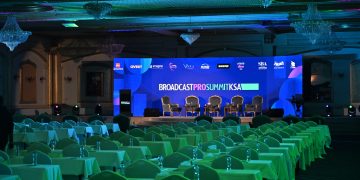
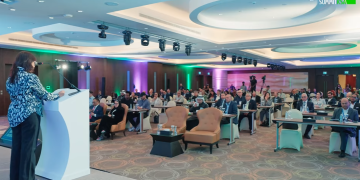
A flagship ASBU event is the Arab Radio and TV Festival, which plays a key role in raising its visibility. “This year, delegations from Fujairah, Sharjah and others returned after years of absence. We received one consistent piece of feedback: the event should be longer.”
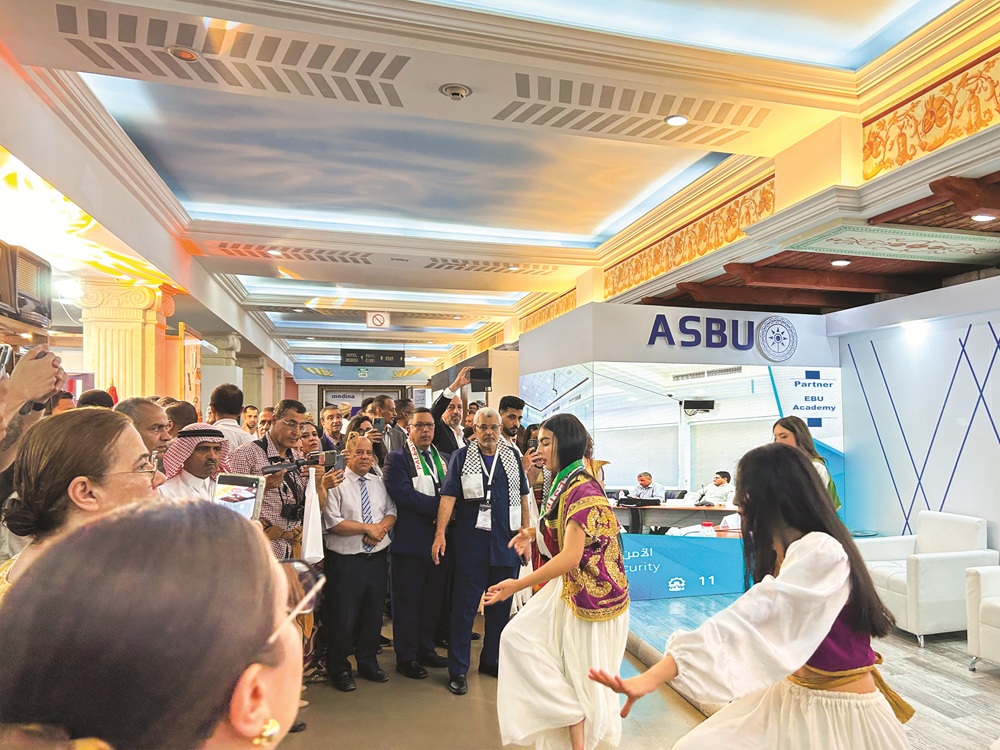
Beyond its glitz, the festival is also a forum for networking, training and cultural exchange. To keep costs down, ASBU manages most logistics in-house, from hotel bookings to airport pickups. “The cultural programme includes performances, exhibitions and masterclasses, which help position ASBU not only as a technical organisation but also as a champion of Arab content. The only outsourcing we do is for venue décor and audiovisual systems.”
Even with regional crises, exhibitor participation increased by 10%, Suleiman notes. “At one point the Iran crisis nearly compromised our event, but we managed. We’re now considering Hammamet for future editions. It offers more space, better hospitality deals and a more relaxed atmosphere.”
ASBU also helps its members with shared resources. Previously, each member covered major events such as the Arab Summit, UN General Assembly, G20 and Hajj individually. This led to higher costs and duplicated infrastructure. Today, ASBU coordinates joint coverage through unified teams supported by its satellite network and cloud platform, resulting in significant cost savings and improved visibility
Content sharing and cultural unity
Daily radio and TV content exchange is just one part of ASBU’s collaborative model. The organisation curates pan-Arab series around themes such as music, museums and cultural heritage.
“We organise thematic series – for instance, 26-minute documentaries from each member country on cultural heritage. We’ve also introduced children’s programming, sports highlights and educational content to the exchange. Members contribute based on their strengths and everyone benefits. It’s an organic, circular economy of content, sustained entirely by collaboration. For major political or sporting events, we switch to satellite to ensure zero latency, but the daily traffic runs smoothly on the cloud.”
Preparing for the AI era
Looking ahead, ASBU is launching an Arab AI task force that will explore applications in dubbing, smart translation, programming and children’s content. “Registration will be free and online,” Suleiman says. “The group will focus on AI tools for media production, including children’s content, dubbing and smart translation. We already use AI internally. My team even used ChatGPT to draft new committee guidelines. AI-based translation is enabling multilingual training without additional cost. We plan to launch our AI initiative by year-end.”
With nearly all member states now HD-ready, ASBU’s next challenge is helping them transition into the AI-driven future.
Suleiman’s vision for ASBU is more than just financial sustainability; it’s a model for how regional institutions can adapt, thrive and lead in an era of rapid change. “ASBU is unique – no other pan-Arab organisation is doing what we do for public media. We’re proud to be self-sufficient, forward-looking and inclusive,” he concludes.
Bassil Zoubi, CTO, ASBU
 “We’ve just completed the second phase of our Cloud Exchange Network development, specifically the ASBU Cloud Platform. This involved collaboration with multiple vendors, all carefully selected under the oversight of the ASBU Broadcast Solutions Group. This group meticulously reviews integrations across our facilities, ensuring seamless operations. Our comprehensive solutions are now accessible to all members, featuring advanced AI capabilities, live streaming using open protocols, low latency transmissions via TVU Networks, and robust postproduction facilities integrated into our file exchange network.
Moving forward, our focus shifts to enhancing our AI capabilities. This includes deploying features such as language auto-detection, facial recognition and content summarisation, strengthening our technological infrastructure.
In our upcoming phase, administrative enhancements will be in focus. We’re analysing workflow efficiencies among ASBU members, evaluating usage metrics to optimise content deployment. This assessment provides invaluable insights into member contributions, from news generation to content utilisation and refinement.”